
What is the difference between maraging steel and normal steel?
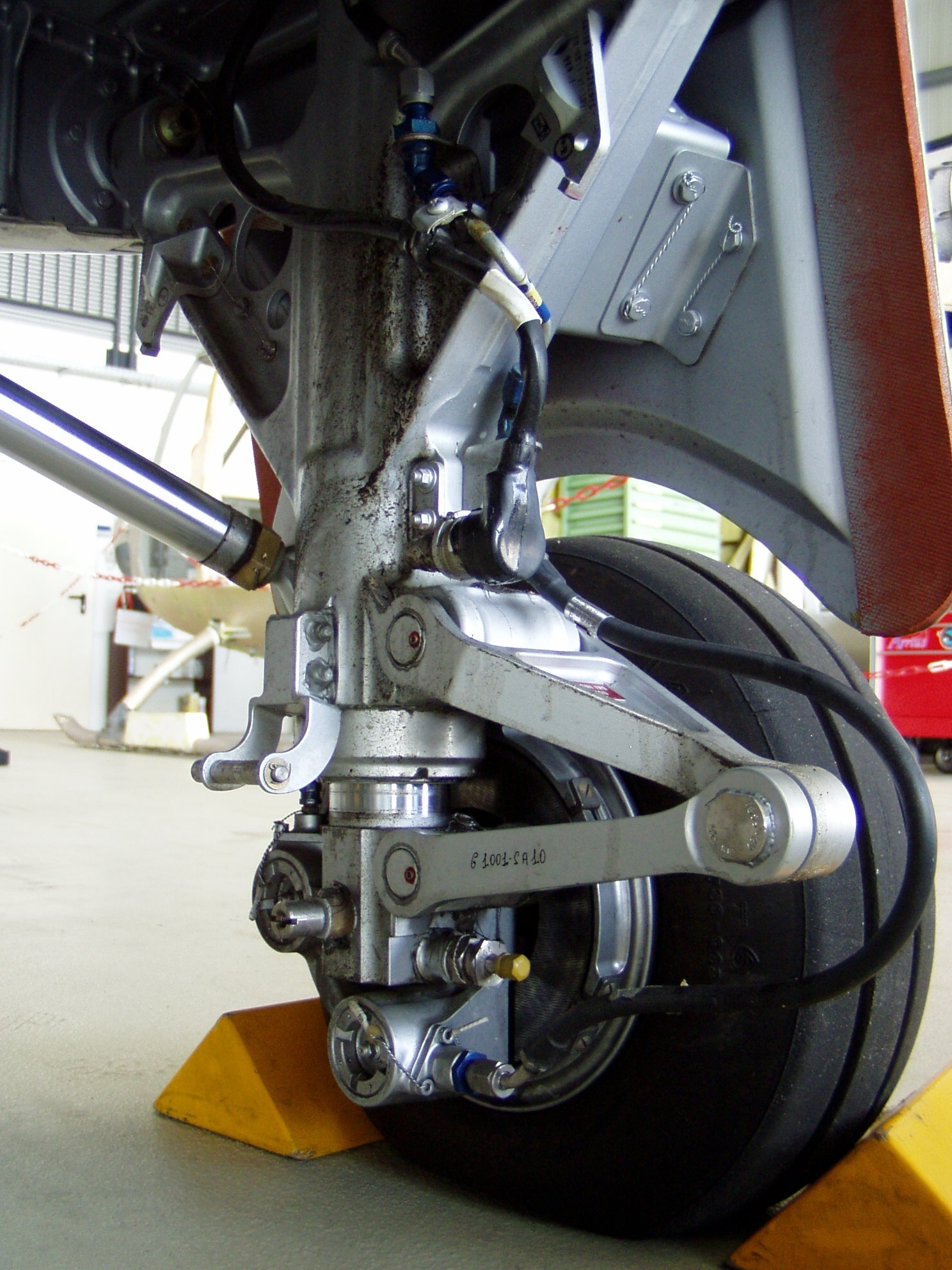
From its early applications to the latest, most demanding uses; steel has been the backbone of industrial manufacturing and has undergone countless transformations. Among this wide family of iron-carbon alloys, maraging steel represents a specialty class that challenges the traditional principles of how steel gains strength. To those engineers who specify materials for critical applications, the need to understand the fundamental differences of maraging steel versus conventional steel grades becomes imperative.
The difference goes far beyond mere composition: the maraging steel represents a wholly different approach to strengthening mechanisms, processing routes, and application philosophy. Whereas the strength of all conventional steels is derived principally from the content of carbon, outstanding properties exhibited by maraging steels are pursued via an altogether different metallurgical route.
Understanding the Basics of Conventional Steel
Traditional steel gets much of its strength from its carbon content, and from hard microstructural phases that form during heat treatment. Despite their small size, the carbon atoms, when dissolved in iron, cause distortion of the crystal lattice that resists dislocation movement, the mechanism of plastic deformation of metals.
Carbon content of 0.05 to 0.25% imparts good formability and weldability to the low-carbon steels but only relatively modest strength, and tensile strengths usually lie in the range 400-550 MPa. Medium-carbon steels contain 0.25-0.60% carbon and, through heat treatment, are thus stronger up to 600-850 MPa in many applications. High-carbon steels with carbon content above 0.60% have very high hardness and strength but at the sacrifice of ductility, and welding becomes increasingly problematic.
Conventional steel is heat treated by first heating up to temperatures at which austenite forms. Austenite is a high temperature face-centred cubic crystal structure which dissolves carbon uniformly. Subsequent fast cooling converts this austenite into martensite, consisting of a very hard, body-centred tetragonal structure supersaturated with carbon. Subsequent tempering at intermediate temperatures removes brittleness while maintaining useful strength levels.
This method works very effectively for thousands of uses, but it has intrinsic drawbacks. One such limitation is that, for instance, the strength achieved through a higher carbon content steadily decreases toughness, which is the capacity of a material to absorb energy before breaking. An increase in carbon content leads to deterioration in weldability as high-carbon steels tend to crack in the heat-affected zone next to the weld. Dimensional stability during heat treatment also becomes a problem because hardening processes result in significant distortion.
Weldability Characteristics
The low carbon content gives maraging steel a distinct advantage with respect to weldability. Traditional high-strength steels become more and more difficult to weld as carbon increases, requiring preheat and controlled interpass temperatures and also post weld heat treatment to prevent cracking. The heat-affected zone next to the welds becomes hard and brittle, and is then prone to hydrogen cracking.
Few disadvantages are associated with maraging steel due to its low carbon content. It can be welded in a solution-annealed (soft) condition using standard techniques with low preheat. The full strength of the steel is developed subsequently by post-weld ageing treatment. Thus, fabricating complicated assemblies can be realized with welded components, which cannot be produced using conventional high strength steels.
Dimensional Stability
The heat treatments for steels involve getting to a temperature of 800-950°C, followed by rapid quenching. A complex thermal cycle arises, causing distortion and dimensional changes. Consequently, it is necessary to machine complex components with a loose fit, and to remove large amounts of material in a grinding operation after the heat treatment.
Unlike the other steels, the ageing treatment for maraging steel is done at 480-500°C, which is lower without causing a change in phase. Ageing does not alter the martensite, but the ageing process causes it to be strengthened with the formation of precipitates. Precise machining can occur in the soft condition without considerable distortion, as dimensional change is less than 0.05%.
Machinability Considerations
Both classes of materials can be machined in their soft conditions. Annealed conventional steels offer good machinability, with cutting characteristics dependent upon composition and hardness level. Maraging steel in the solution-annealed condition machines like medium-carbon steels, with good chip formation and tool life.
This advantage appears when machining of high-strength material is required. Hardened conventional steel requires grinding or electrical discharge machining for most operations--slow, expensive processes. Maraging steel can be precision-machined in the soft condition, then aged to full strength with minimal distortion, thus enabling geometries that would be impractical in hardened conventional steels.
Application Considerations
When Conventional Steel Proves Adequate
In terms of applications, traditional steels still represent the best option for a very large number of uses. For strength levels below 1000 MPa, for significantly cost-constrained applications, or for applications in which certain properties such as wear resistance or edge retention are far more important, traditional grades of steel often remain superior.
Conventional steel offers an excellent balance between cost and performance; therefore, it finds extensive use in the construction, general machinery, automotive parts, and a host of other applications. The wide range of grades, well-established methods of processing, and global supply infrastructure make conventional steel the default option for many applications.
Where Maraging Steel Demonstrates Value
Due to cost, maraging steel is used only when necessary. Sometimes, though, the unique properties of maraging steel call for its use in certain industries. Very few examples include aerospace landing gear, which requires ultra-high strength combined with excellent fracture toughness; cases for rocket motors must also be both strong and tough, but maraging steel is used since it can be welded.
Tooling for plastic injection moulding and die-casting is another important application. Dimensional stability allows the use of tight tolerances, while the high strength of the steel prevents tool failure in service. Maraging steel can also be easily polished, allowing the moulding of high-porosity parts.
Other applications include precision mechanical components like gears and shafts of high strength and fasteners which are required to sustain extreme loads. Owing to the properties of maraging steel, components can be made much smaller. In addition, complicated geometries can be manufactured and many more shapes are possible as compared to pre-hardened conventional steels.
Other important factors to be considered include processing and heat treatment. In the case of maraging steel, conventional processing steps are to be followed. These include hot rolling or forging, normalising to prepare for further steps, rough machining for shape, finishing with hardening and tempering for strength, followed by finish grinding. Each of these steps follows well-defined processing steps and requires different equipment and expertise, and in the case of maraging steel, these steps are also widely available.
Further processing involves machining the steel followed by aging at 480-500°C for 3-6 hours. The heat treatment is less complicated, and there is less distortion when aging at lower temperatures, which is an advantage in machining precision components.
For specific mechanical properties, one has to monitor certain processing parameters for each alloy; for example, solution annealing time and temperature play the most important role in steel maraging for controlling grain size, while for steel, the temperature and rate of cooling in austenitizing are very critical.
Cost Considerations and Economic Factors
Maraging steel is much more costly than conventional steel per kilogramme. As a rough estimate, the raw material prices for equivalent weights of conventionally high-strength steels are 3 to 5 times higher. This reflects the high nickel, cobalt, and molybdenum content. Comparisons of total manufacturing cost become more involved. The processing advantages of maraging steel-minimum heat treatment distortion, freedom to machine in the soft condition, excellent weldability-can balance material costs in appropriate applications. Reduced scrap rates, elimination of post-heat treatment grinding, and simplified fabrication sequences all contribute to economic viability. In high volume, cost-sensitive applications, conventional steel generally comes out on top, while for low volume or high-performance applications in which component failure has serious consequences, reliability and processing advantages of maraging steels often justify the premium.
As concluded. The difference between maraging steel and conventional steel is more than just simple composition; rather, it extends into basic strengthening mechanisms, processing philosophies, and application domains. Conventional steel, strengthened primarily through carbon and martensitic transformation, serves admirably over a wide range of applications for which its cost-effectiveness and versatile properties render it ideal.
Maraging steel represents a specialised solution for the most demanding applications requiring ultra-high strength combined with excellent toughness, weldability, and dimensional stability. Its precipitation-hardening mechanism can achieve property combinations impossible in conventional steels; however, this is at significantly higher material cost. At Dynamic Metals, we supply both conventional high-strength steels and maraging steel grades such as 250, 300, and 350.
Our technical team can advise on material selection based on specific application requirements and help customers balance their performance requirements against practical and economic constraints. With full traceability and certification, we ensure the materials meet demanding specifications for critical applications where material properties have a direct impact on component reliability and service life. Understanding these fundamental differences allows for informed material selection decisions that can optimize performance, manufacturability, and cost for specific applications.
Need more information? Get in touch