
Which Titanium Grade to Choose for High-Performance Applications?
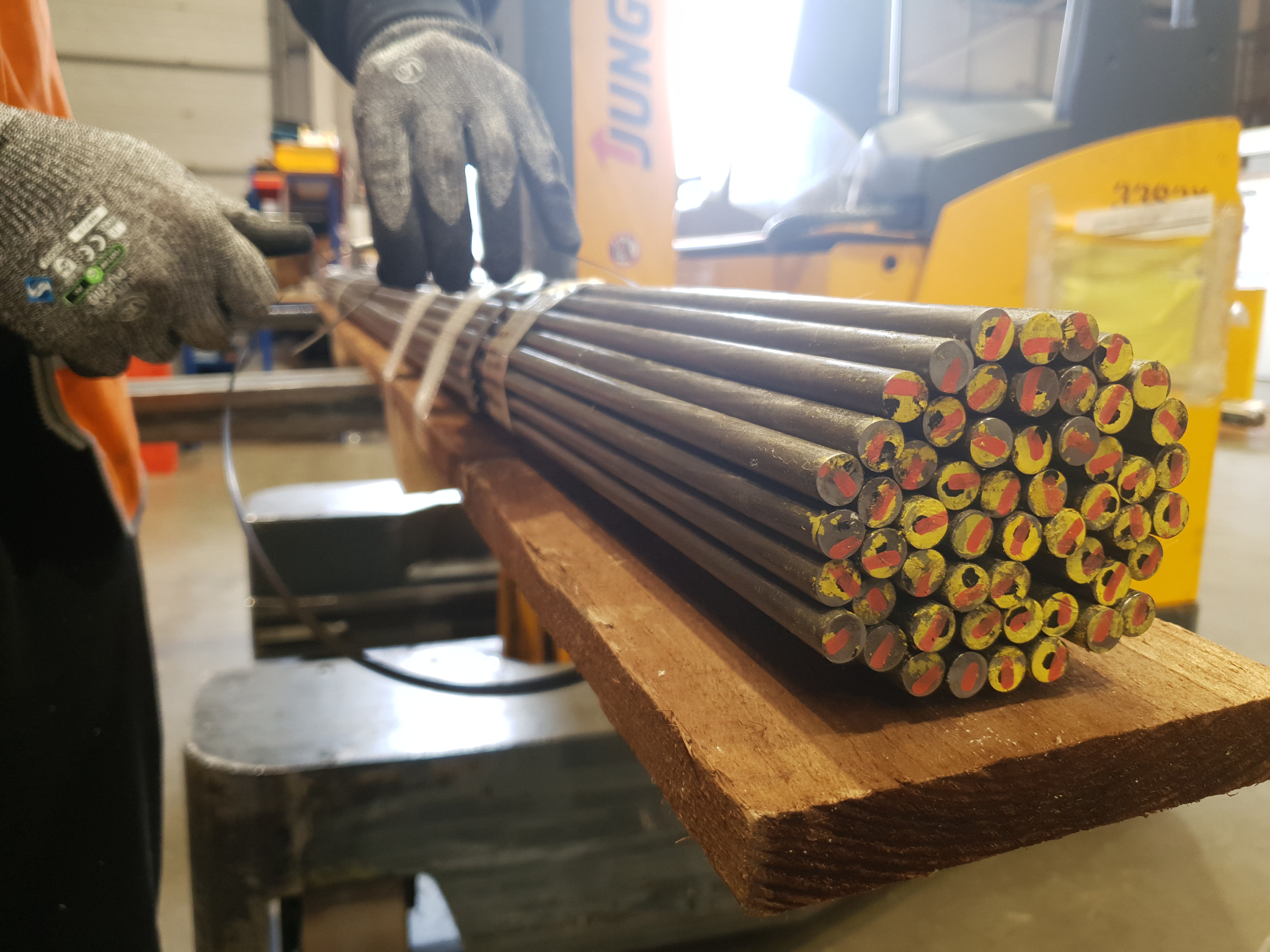
When engineers specify titanium for racing or aerospace components, they face an immediate question: which grade delivers the right balance of strength, weight, and fabricability for their application? Understanding how various titanium grades perform in highly demanding environments is crucial for correct material selection.
Dynamic Metals Ltd can help motorsport and aerospace teams select the proper titanium grade for their demanding components. Here is what you need to know about selecting a high-performing titanium alloy.
Two Families: Commercially Pure (CP) and Alloyed
There are two main types of titanium, which differ substantially from each other.
CP grades contain a very low amount of alloying additions, resulting in high corrosion resistance and excellent fabricability, with relatively moderate strength. Grades 1-4 differ in oxygen content, with higher oxygen levels increasing tensile strength but lowering formability.
Alloyed titanium grades are alloyed with aluminium, vanadium, or other metals to provide certain desirable properties. Ti-6Al-4V is the most common grade of titanium alloy, offering nearly double tensile strength in comparison to CP grades and good corrosion resistance.
The choice of titanium type will affect its behaviour under load and manufacturing costs.
Ti-6Al-4V: High-Performance Titanium
Ti-6Al-4V grade titanium is the most popular choice for aerospace and racing applications due to outstanding strength-to-weight ratio and proven reliability.
This alpha-beta alloy offers ultimate tensile strength around 895-930 MPa when annealed and increased to 1100 MPa when heat-treated. It is nearly double the highest tensile strength of any commercially pure titanium grade. This makes this grade suitable for highly stressed parts with extreme strength demands.
Its high strength-to-weight ratio makes it possible to create components with higher strength compared to steels but at much lower weights. In annealed state, Ti-6Al-4V has nearly twice as high tensile strength compared to typical steels at 45% lower density.
The typical weight-saving effect of using this grade compared to steel is around 40-45%. Racing suspension system made from Ti-6Al-4V saves 8-12 kg compared to the equivalent steel system, which is a significant advantage in racing environment.
Racing suspension parts such as wishbones, uprights, or high-end fasteners are typically made from Ti-6Al-4V. It is extensively used in aerospace industry in structural components, landing gear, and fasteners. Formula 1 racing cars have up to 20 titanium suspension components.
This alloy can be used both in annealed and heat-treated states depending on the application-specific demands.
CP Grade 2: Formability First
If maximum strength is not your primary goal, CP Grade 2 is the best option.
CP Grade 2 titanium offers relatively low strength compared to alloyed grades with ultimate tensile strength of 345 MPa and yield strength 275 MPa. However, Grade 2 possesses excellent corrosion resistance and outstanding formability and weldability, which make this grade useful in applications where those characteristics are needed.
Applications such as racing exhaust systems where complicated shape fabrication is required can benefit from high weldability and formability of CP Grade 2 titanium. Chemical process engineering systems and marine equipment are also common users of this titanium alloy due to excellent corrosion resistance.
This alloy can be easily formed and welded using a filler metal with matching composition, which makes it a great choice in certain applications.
CP Grade 4: Good Formability and Higher Strength
CP Grade 4 is an intermediate solution that offers higher strength than CP Grade 2 but lacks alloyed titanium strength. It has ultimate tensile strength of 550 MPa and yield strength 485 MPa, making this grade suitable for applications with moderate strength needs and good corrosion resistance.
Grade 4 CP titanium alloy finds its place in aerospace applications where higher strength than CP Grade 2 is required but alloyed titanium is not a must-have. Certain racing applications can also utilize this alloy when lower tensile strength and high formability are acceptable.
Selection Decision Framework
Depending on your application demands, the choice will fall onto one of three grades:
Use Ti-6Al-4V when:
• Maximum strength-to-weight ratio is required
• Component operates under extreme mechanical loads
• Weight-saving is worth paying additional material cost
• Your application belongs to aerospace or racing structural category
• You need high fatigue resistance
Use CP Grade 2 when:
• Forming and welding processes are extensive
• Corrosion resistance is your primary requirement
• Your application can tolerate moderate strength
• Complexity and manufacturing cost are your top priority
Use CP Grade 4 when:
• Required strength exceeds CP Grade 2 possibilities
• Ti-6Al-4V is too expensive for your application
• Excellent corrosion resistance is still your top priority
• Material cost optimisation is a priority
Practical Examples
For example, racing suspension wishbone part is operated in highly cyclic stress environment and thus will be better off using Ti-6Al-4V, while a racing exhaust header can utilize CP Grade 2 for its formability.
The Choice: Strength vs. Formability
Higher-strength titanium alloys (such as Ti-6Al-4V) rely on alloying additions and heat treatment to achieve high tensile strength, while this, at the same time, limits their formability and complicates manufacturing process.
CP titanium grades are superior in terms of formability and welding but offer insufficient strength to compete with alloyed alloys in strength-to-weight ratio.
Thus, for racing teams manufacturing structural components, it is better to use Ti-6Al-4V. On the other hand, fabricators manufacturing complicated-shaped exhaust systems are likely to prefer CP Grade 2 with its superior formability.
The same logic applies to aerospace applications with high-strength structural components made of alloyed titanium and ducting made of CP grades due to easy manufacturing.
Conclusion
For demanding structural applications in aerospace and racing industries, Ti-6Al-4V is the best solution to provide necessary strength and weight savings. Its prevalence in racing components and aircraft can be explained by these properties.
On the other hand, it does not necessarily mean that the highest strength is always your best option. If formability and weldability are key characteristics for your application, CP titanium grades could be a better choice.
Dynamic Metals Ltd has been supplying titanium components to racing teams and aerospace companies since 2010, and we have gained substantial experience in titanium grade selection.
For help choosing a titanium alloy, visit our titanium products page or contact our materials specialists.
Need more information? Get in touch