
- Aerospace structural components — fuselage frames, bulkheads, and attachment fittings
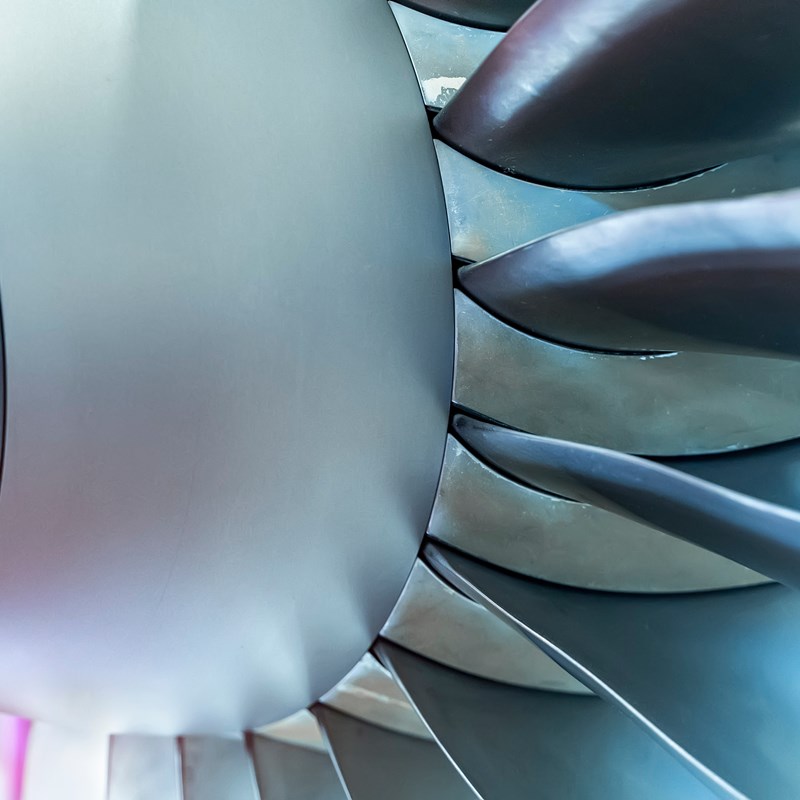
- Gas turbine compressor blades and discs in the cooler sections of jet engines
- Aircraft fasteners replacing steel for significant weight saving across large airframe assemblies
- Motorsport suspension components, uprights, and fasteners where weight saving is critical
- Orthopaedic implants, dental implants, and surgical instrumentation requiring biocompatibility
- Marine hardware requiring corrosion resistance in seawater environments
TITANIUM 6AL4V
Typical Applications
Medical Implants
Turbine Blades
Fasteners
Motor Racing applications
Aircraft Structural Components
6AL4V Suppliers and Stockholders
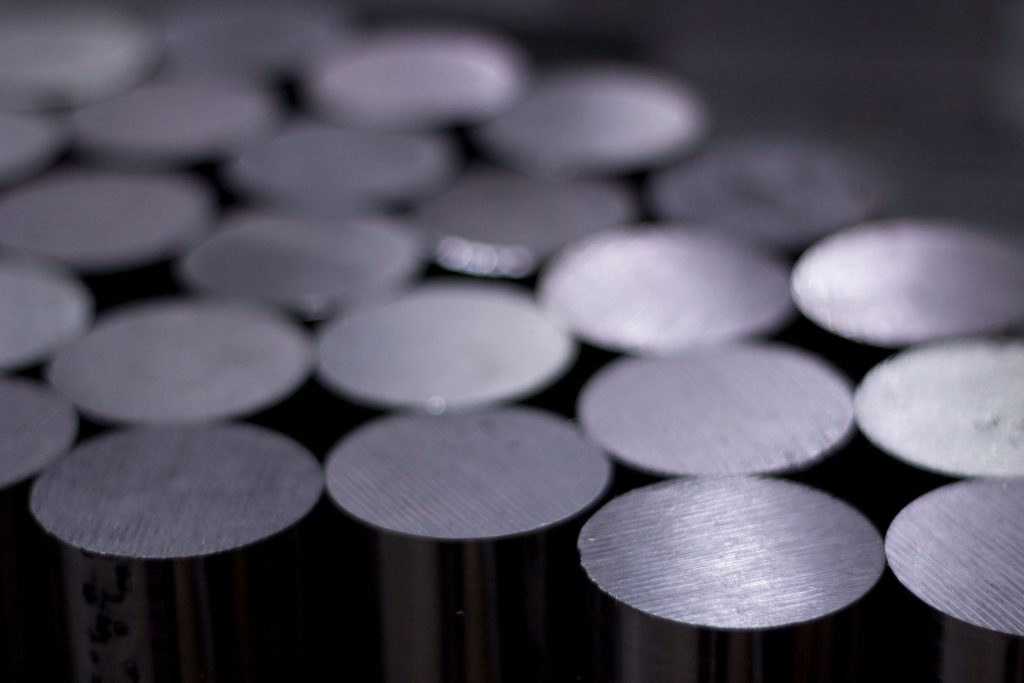
Dynamic Metals is a specialist supplier and stockholder of titanium 6Al-4V, supplying aerospace, motorsport and medical industries with certified bar, sheet and plate to AMS 4928, AMS 4911, BS TA11 and more. No minimum order quantities.
Titanium 6Al-4V (UNS R56400, W.Nr 3.7164) is an alpha-beta titanium alloy containing 5.50-6.75% aluminium and 3.50-4.50% vanadium. It is the most widely used titanium alloy globally, accounting for approximately 50% of all titanium production — a position it holds because no other titanium alloy matches its combination of strength, low density, corrosion resistance, and proven processability across such a broad range of applications.
Aluminium stabilises the alpha phase and provides solid solution strengthening — raising strength and resistance to creep deformation at elevated temperatures. Vanadium stabilises the beta phase and improves hardenability. Together these additions give 6Al-4V tensile strength of 896-931 MPa in the annealed condition depending on product form and section size, at a density of just 4.43 g/cm³ — roughly 57% lighter than steel at comparable strength levels. Service temperatures to 399°C are specified for sheet and plate to AMS 4911, with bar and forgings to AMS 4928 rated to 399-510°C depending on time at temperature.
The alloy is produced by multiple melting, with vacuum arc remelting (VAR) mandatory as the final melt stage. This ensures the material cleanliness and microstructural consistency required for aerospace certification. Plate 12.70mm and above in thickness requires ultrasonic inspection to AMS2631 Class A1. The microstructure — alpha-beta processed — must show no continuous network of alpha at prior beta grain boundaries, which would reduce ductility and fatigue performance.
6Al-4V is available from Dynamic Metals in bar to AMS 4928 and sheet and plate to AMS 4911, covering the full range of product forms required by aerospace, motorsport, medical, and industrial customers.
Related Products
Key Features and Advantages
• Tensile strength 896-931 MPa annealed — section size and product form dependent per AMS 4928X and AMS 4911T
• Density 4.43 g/cm³ — approximately 57% lighter than steel at comparable strength levels
• Aluminium addition (5.50-6.75%) stabilises alpha phase, increases strength and creep resistance to 399-510°C
• Vanadium addition (3.50-4.50%) stabilises beta phase, improves hardenability and corrosion resistance
• VAR mandatory as final melt stage — ensures microstructural cleanliness required for aerospace certification
Technical specification
Related Specifications - Bar & Tube
AMS 4928
AMS 4965
AMS 4967
AMS 6931
AMS T 9047
ASTM B348
BS TA11
TA28
ISO 5832-3
W.Nr 3.7164/5
ASTM F136
UNS R56400
MSRR 8652
MSRR 8614
Related Specifications - Sheet & Plate
AMS 4911
Mil T 9046
ASTM B265
TA10
TA56
TA59
UNS R56400
MSRR 8633
Specific Gravity
4.484 g/cm3
Chemical Composition (WT %)
Min
Max
C
-
0.08
Al
5.5
6.5
N
-
0.05
O
-
0.2
Ti
-
Bal
V
3.50
4.50
Fe
-
0.25
H
-
0.01
Y
-
0.005
Typical Mechanical Properties in the Annealed condition
0.2% Proof Stress
MPA
Min
862
Tensile Strength
MPA
Min
900
Elongation
%
Min
10
Reduction of Area
%
Min
25
Hardness
HRC
-
36
- Bar to AMS 4928X: tensile strength 931 MPa min (≤50.80mm diameter), 896 MPa min (>50.80mm)
- Sheet/plate to AMS 4911T: tensile strength 920 MPa min (≤4.76mm thick), 893 MPa min (4.76-101.60mm)
- 0.2% proof stress 827-869 MPa depending on product form and section
- Elongation minimum 10% longitudinal in all product forms
- Reduction of area minimum 25% longitudinal (bar ≤50.80mm diameter)
- Maximum service temperature 399°C (sheet/plate, AMS 4911), 399-510°C (bar/forgings, AMS 4928)
- Corrosion resistance derived from stable, self-repairing TiO₂ passive film on the surface
- Performs reliably in seawater, salt atmosphere, and marine environments
- Resistant to body fluids and biological environments — basis for medical implant approvals
- Good resistance to dilute acids, chlorides, and most organic compounds
- Not recommended for exposure to concentrated hydrofluoric acid or certain reducing acids
- ARP982 practices recommended to minimise stress corrosion cracking risk in certain processing conditions
- Multiple melting mandatory per AMS 4928X and AMS 4911T — VAR required as final melt stage
- First melt may be vacuum consumable electrode, electron beam cold hearth, plasma arc cold hearth, or vacuum arc skull melting
- VAR ensures consistent chemistry and microstructure throughout the full cross-section
- Microstructure must show alpha-beta processed structure with no continuous network of alpha at prior beta grain boundaries
- Plate 12.70mm and above requires ultrasonic inspection to AMS2631 Class A1
- Full composition certification per heat — hydrogen content certified per lot after thermal and chemical processing
- Machine in annealed condition using carbide tooling at lower cutting speeds than steel
- Generates significant heat during cutting — adequate coolant and sharp tooling essential to prevent work hardening
- Weldable by TIG (GTAW) process in inert atmosphere — oxygen and nitrogen contamination must be prevented
- Solution treat and age (STA) heat treatment available to increase tensile strength above annealed values
- Alpha case (oxygen-rich surface layer) must be removed after hot working or heat treatment before final use
- Chemical composition tolerances per AMS2249 govern check analysis variations
- The most extensively tested and qualified titanium alloy — largest database of design allowables and fatigue data of any titanium grade
- Approved across more OEM specifications than any other titanium alloy — reduces qualification burden on new programmes
- Available in the widest range of product forms — bar, wire, forgings, sheet, plate, tube, and drawn shapes
- Density advantage over steel (57% lighter) combined with strength comparable to many high-strength steels justifies use even at titanium’s higher cost
- Biocompatibility combined with corrosion resistance makes it uniquely suited to implant applications not possible with steel or aluminium
- VAR production requirement ensures consistent properties — unlike some alloys where optional melting routes create property variability
- Bar — AMS 4928, BS TA11, up to 254.00mm diameter
- Sheet and plate — AMS 4911, up to 101.60mm thickness
- Wire, forgings, flash-welded rings, and drawn shapes — AMS 4928
- Supplied in annealed condition as standard
- No minimum order quantities on stock items
- Available for prototype development and production requirements
- Specialist supplier of titanium 6Al-4V since 1997
- AS9100 certified — full quality management system in place
- Complete material certification with traceability to original VAR melt heat
- No minimum order quantities on stock items
- Materials engineering team available to advise on specification and processing requirements
- Fast UK delivery on standard stock sizes

Need more information? Get in touch