
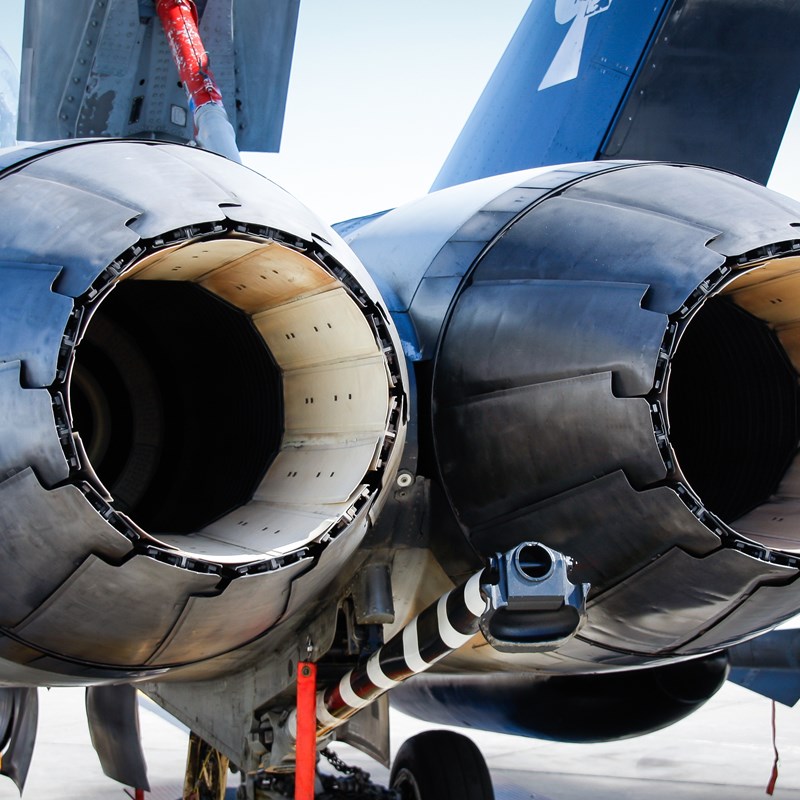
- Gas turbine blades, discs, rings and structural components operating at sustained elevated temperatures
- Aerospace fasteners and bolts in engine and hot-section assemblies, manufactured to BS 4HR 601
- Exhaust valves in high-performance and racing engines
- Tube supports and structural fittings in nuclear steam generators where elevated-temperature strength and corrosion resistance must be maintained over extended service lives
- Combustion chamber and turbine nozzle guide vane hardware in military and civil aero-engine programmes
- Any application where a nickel superalloy must perform reliably across a broad temperature range, combining high tensile strength, creep resistance and oxidation resistance
Nimonic 80a, Nickel Alloy 80a
Typical Applications
Bolts
Exhaust valves
Gas turbine components
Tube supports in nuclear steam generators
BS 3HR 1, BS 4HR 601 — Suppliers and Stockholders
Dynamic Metals has been supplying Alloy 80A to aerospace, power generation and motorsport customers. We hold certified stock to BS 3HR 1 and BS 4HR 601 with no minimum order quantities, available for immediate despatch.
Alloy 80A — also known commercially as Nimonic 80A — is a nickel-chromium superalloy strengthened by precipitation hardening through controlled additions of titanium and aluminium. It shares its base composition with Alloy 75 but departs from it fundamentally in capability: where Alloy 75 is a solid-solution strengthened grade suited to moderately elevated temperatures, Alloy 80A develops a coherent gamma-prime (γ') precipitate phase on ageing that locks dislocation movement and enables the alloy to sustain significant load at temperatures up to approximately 815°C.
The alloy is specified to BS 3HR 1, the British Aerospace Series standard covering nickel-chromium-titanium-aluminium heat-resisting alloy billets, bars, forgings and parts. Bar and wire produced for aerospace fastener manufacture falls under BS 4HR 601, which governs material in dimensions up to 30 mm for cold working and hot upset forging applications. Both standards carry the same nominal composition — 18–21% chromium, 1.8–2.7% titanium, 1.0–1.8% aluminium, nickel base — and the same mechanical property requirements in the precipitation-treated condition.
Material is solution treated at 1080°C ± 10°C, air or oil or water quenched, then precipitation treated at 700°C ± 10°C for 16 hours and air cooled. In this condition bars and extruded sections achieve a minimum proof stress of 600 MPa, minimum tensile strength of 1000 MPa, and minimum elongation of 20%, with a creep rupture stress of 340 MPa at 750°C sustained for not less than 30 hours. This combination of ambient-temperature mechanical strength and elevated-temperature creep resistance makes Alloy 80A one of the most widely used nickel superalloys in the British Aerospace Series.
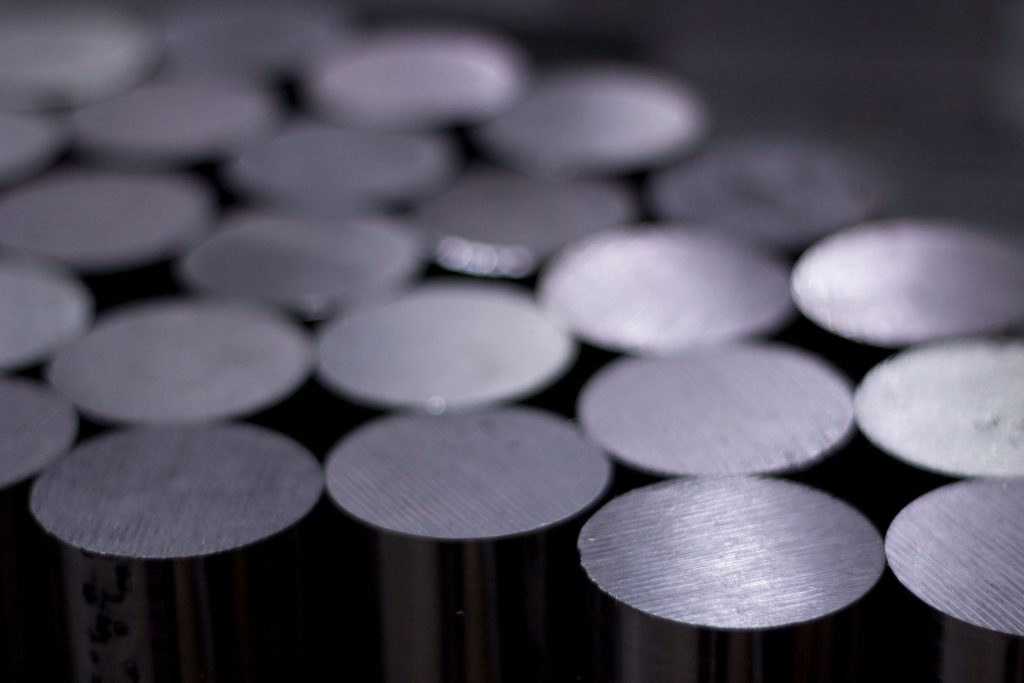
Dynamic Metals holds stock in bar form, with full certification and traceability to the original melt heat. No minimum order quantities apply on stock items.
Related Products
Key Features and Benefits
• Precipitation hardened by titanium and aluminium additions, developing a gamma-prime phase that sustains tensile and creep strength at operating temperatures up to approximately 815°C
• Meets BS 3HR 1 requirements for bars, forgings and parts, and BS 4HR 601 for fastener bar and wire — covering the full range of machined, forged and cold-formed applications
• Minimum proof stress of 600 MPa and tensile strength of 1000 MPa in the solution treated and precipitation treated condition
• Creep rupture performance verified at 750°C — minimum rupture stress of 340 MPa sustained for 30+ hours, as required by both specifications
• Excellent oxidation resistance at elevated temperatures, supported by the high chromium content of 18–21%. Available in bar form with full material certification and heat traceability; no minimum order quantities on stock sizes
Technical specification
Related Specifications
BS 3076 (NA20)
BS HR1
BS HR601
ASTM B637
UNS N07080
MSRR 7011
W.Nr 2.4952
W.Nr 2.4631
DIN 17742
Specific Gravity
8.19 g/cm3
Chemical Composition (WT %)
Min
Max
Ni
Bal
-
Cr
18
21
Fe
-
3.0
C
-
0.10
Mn
-
1.0
Si
-
1.0
S
-
0.015
Ti
1.8
2.7
AI
1.0
1.8
Cu
-
0.2
B
-
0.008
Zr
-
0.15
Co
-
2.0
Typical Mechanical Properties
0.2% Proof Stress
MPA
Min
620
Tensile Strength
MPA
Min
1000
Elongation
%
Min
20
Reduction of area
%
Min
12
Hardness
HV
Min
300
- Solution treated and precipitation treated condition to BS 3HR 1: minimum 0.2% proof stress 600 MPa, minimum tensile strength 1000 MPa, minimum elongation 20%
- Hardness in use condition: minimum HBW 285 or HV 310
- Elevated-temperature creep rupture requirement: at 750°C, minimum rupture stress of 340 MPa sustained for a minimum of 30 hours
- Properties consistent across bars, extruded sections, billets and forgings — all meeting the same use-condition mechanical requirements when tested in the longitudinal direction
- Good oxidation resistance at elevated temperatures supported by chromium content of 18–21%
- Protective oxide layer stable up to approximately 815°C in continuous service
- Well-established service record in environments involving combustion gases, sulphidation exposure and thermal cycling
- Not selected on the basis of low-temperature aqueous corrosion performance — corrosion behaviour is relevant in high-temperature gas-path environments where oxidation and hot corrosion resistance are the governing requirements
- BS 3HR 1 permits air melting, vacuum melting, air melting followed by vacuum refining, or consumable electrode remelting — reflecting the range of quality levels appropriate to different applications within the aerospace series
- BS 4HR 601 (fastener bar and wire) permits the same melting routes
- Inspection and acceptance carried out in accordance with BS HR 100 — covering external and internal defects, macrostructure and dimensional inspection
- Grain size for forgings assessed per Section 4 of BS HR 100
- Fastener bar for hot upset forging: grain size must be uniform 4 or finer with no duplex grain per ASTM E112
- Every heat certified to composition, condition and mechanical properties as required by the applicable specification
- Machine in solution treated condition before precipitation hardening — using rigid setups, sharp tooling and positive cutting action
- Work hardening rate is higher than for austenitic stainless steels — cuts must be kept continuously engaged and light cuts avoided
- Fastener bar and wire to BS 4HR 601 supplied in three designations:
- HR 601A — cold worked and solution treated
- HR 601B — cold worked and softened (for continuous cold forging or cold extrusion)
- HR 601C — cold worked, straightened and ground (for hot upset forging)
- Precipitation treatment: 700°C ±10°C for 16 hours followed by air cooling
- For finished parts ordered to drawing: 750°C ±10°C for 4 hours followed by air cooling
- Bar to BS 3HR 1 (designation HR 1A for machining)
- Bar and wire up to 30mm to BS 4HR 601 for fastener manufacture
- Forgings, billets and extruded sections also covered under BS 3HR 1
- All material supplied with full material certification and heat traceability
- No minimum order quantities on stock bar sizes
- Suitable for both prototype development and production contracts
- Delivers meaningful high-temperature strength through precipitation hardening at a composition and cost level significantly below more complex polycrystalline and directionally solidified turbine alloys
- Well-suited to components operating at sustained elevated temperatures that do not require the extreme temperature capability of alloys such as Alloy 718 or C263
- Long history of use in British Aerospace Series applications carries extensive qualification data and broad approval across civil and military programmes
- A well-understood, widely approved and cost-effective solution within the nickel superalloy family
- Specialist supplier of Alloy 80A to aerospace, power generation and motorsport customers since 1997
- Stock held to BS 3HR 1 and BS 4HR 601 with full material certification and heat traceability supplied with every order
- Team available to advise on specification requirements, supply designations, available sizes and heat treatment routes
- No minimum order quantities on stock items
- AS9100 certified
- Fast UK delivery

Need more information? Get in touch