
52100 is a chromium alloy steel grade designed specifically for bearings and characterized by high carbon content (0.93% to 1.05%) along with chromium (1.35-1.60%). The high carbon and chromium content provide the alloyed steel with high hardening properties, resulting in a hardness of 64-66 HRC. This steel is the most commonly used bearing steel worldwide and is applied in aerospace and motorsport industries wherever resistance to rolling contact fatigue is essential.
52100 Alloy Steel - AMS 6444
Typical Applications
Bearings
Fasteners
AMS 6440, AMS 6444 Suppliers & Stockholders
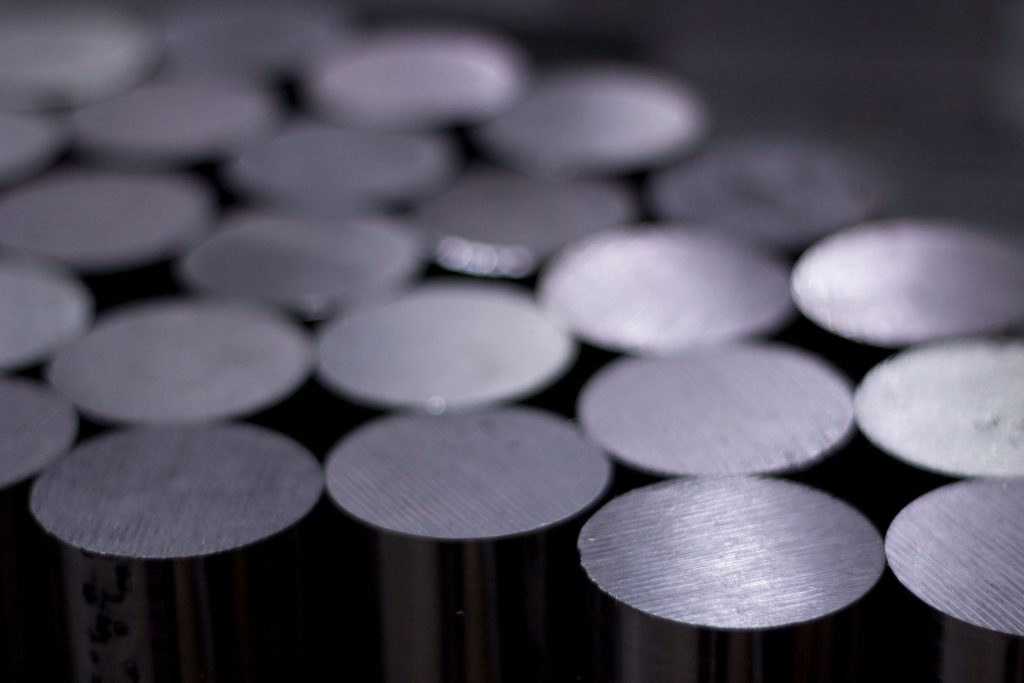
Dynamic Metals is a specialist supplier and stockholder of 52100 alloy steel, supplying aerospace and industrial bearing applications with certified material to AMS 6440 and AMS 6444. No minimum order quantities
52100 is a chromium-carbon low-alloy steel developed specifically for bearing applications. With carbon content of 0.93–1.05% and chromium of 1.35–1.60%, it produces a microstructure of hard chromium carbides dispersed throughout a hardened martensitic matrix — and it is this combination that gives 52100 its exceptional resistance to rolling contact fatigue, surface wear and compressive loading.
AMS 6440 covers aircraft-quality material to AMS 2301 cleanliness standards. AMS 6444 goes further, mandating consumable electrode vacuum remelting (VAR) and premium aircraft-quality cleanliness to AMS 2300 — the tighter specification chosen wherever bearing duty is most demanding or inspection standards are most rigorous. Both specifications cover the same composition and the same product forms: bars, forgings, mechanical tubing and forging stock.
Material is supplied in the annealed condition — bars over 12.70 mm hot finished and annealed with hardness not exceeding 207 HBW, bars 12.70 mm and under cold finished with tensile strength not exceeding 827 MPa. This is the condition in which 52100 is machined before hardening and tempering to achieve operational hardness of approximately 60 HRC.
Dynamic Metals stocks 52100 in bar form across a range of sizes. All material is supplied with full certification and traceability to the original heat, identifying specification, melt source and test results for composition, condition and cleanliness rating.
Related Products
Key Features and Benefits
• Carbon content of 0.93–1.05% combined with 1.35–1.60% chromium develops hard carbides that deliver superior resistance to rolling contact fatigue
• Through-hardening capability to approximately 60 HRC, making it the benchmark bearing steel for aerospace, motorsport and high-load industrial applications
• Two specification tiers available — AMS 6440 (aircraft-quality) and AMS 6444 (premium aircraft-quality, VAR remelted) — supporting component requirements from standard to the most demanding inspection regimes
• Supplied in the annealed condition for machinability, ready for customer hardening and tempering to final operational properties
• Strict decarburisation limits controlled per specification, protecting surface integrity through to final heat treatment. Full material certification and heat traceability supplied with every order, to AMS 2300 or AMS 2301 cleanliness standards as applicable
Technical specification
Related Specifications
AMS 6440
AMS 6444
SA5589
AIR 9160C
Specific Gravity
7.81 g/cm3
Chemical Composition (WT %)
Min
Max
C
0.93
1.05
Mn
0.25
0.45
Si
0.15
0.35
P
-
0.015
S
-
0.015
Cr
1.35
1.60
Ni
-
0.25
Mo
-
0.1
Cu
-
0.3
AI
-
0.05
O
-
0.015
Typical Mechanical Properties
Round Bar
0.2% Yield Strength
MPA
427
Tensile Strength
MPA
651
Elongation
%
27
Reduction of area
%
62.5
Hardness
HBW
179
What are the typical uses for 52100 Alloy Steel?
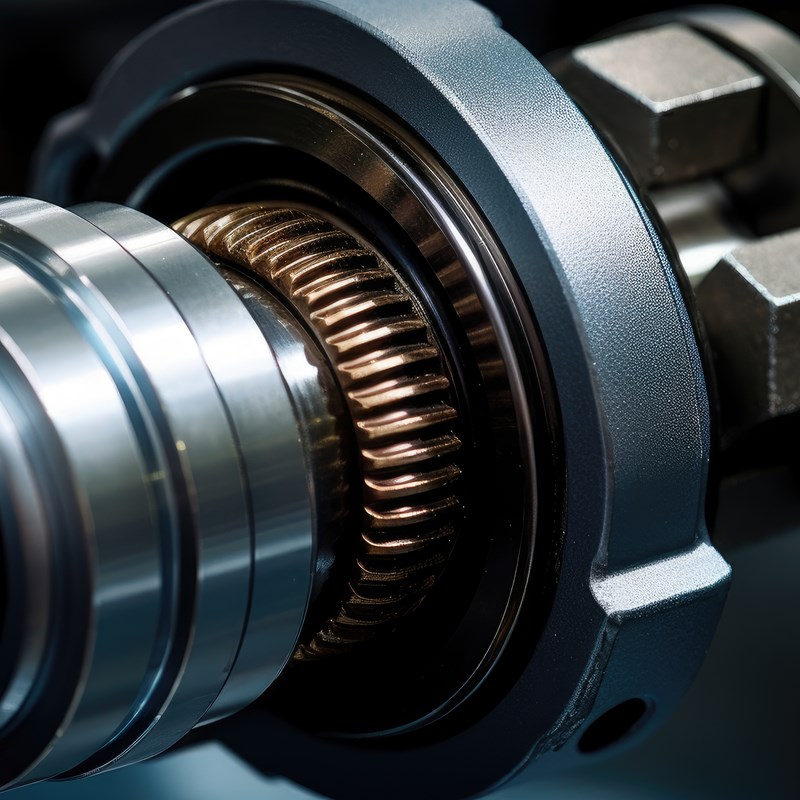
Uses of 52100 include rolling element bearings such as ball bearings, cylindrical roller bearings, and tapered roller bearings for aerospace engines, gearboxes, and machinery. Additional uses include camshaft bearings, bushes, pump components, and any component that needs extreme hardness and wear resistance under rolling and sliding contacts. In aerospace, uses of 52100 include jet engine accessory drives, landing gear actuator systems, and flight control components.
- Hardening cycle: austenitise at 1525°F (829°C), quench in oil, temper to required hardness
- Hardness of approximately 60 HRC consistent through section for thicknesses up to 12.7mm (0.50 inch)
- Through-hardening response is a specification requirement — test specimens must reach minimum 63 HRC under standardised hardening conditions defined in both AMS 6440 and AMS 6444
- Annealed supply condition: tensile strength not exceeding 827 MPa, hardness not exceeding 207 HBW (hot finished) or 248 HBW (cold finished)
- Readily machinable in the annealed condition
- Grinding is the preferred final machining method after hardening
- Not a corrosion-resistant steel — should not be selected on this basis
- As a through-hardening low-alloy steel, offers no meaningful resistance to aqueous corrosion, acids or humid environments
- In service, 52100 bearing components are normally lubricated and sealed — providing environmental protection under normal operating conditions
- Where components are processed cold finished, ground, turned or polished, the specification requires protection from corrosion prior to shipment
- For applications requiring both high hardness and genuine corrosion resistance, stainless bearing steels should be considered
- AMS 6440 — aircraft-quality steel conforming to AMS 2301, with controlled micro-inclusion limits per ASTM E45 Method A
- AMS 6444 — mandates consumable electrode vacuum remelting (VAR) as a mandatory production step, with premium aircraft-quality cleanliness to AMS 2300 and tighter micro-inclusion limits assessed by ASTM E45 Method D
- VAR process reduces non-metallic inclusions, eliminates macro-segregation and improves chemical consistency across the full cross-section — directly improving fatigue life and reliability in critical bearing applications
- Both specifications require macrostructure examination to confirm freedom from pipe, cracks and unacceptable porosity, segregation or inclusions
- Verified heat traceability required under both specifications
- Machine in the annealed condition before hardening — spheroidised cementite in a ferrite matrix is relatively machinable compared to the hardened state
- Higher carbide content means it is not as free-cutting as lower-carbon structural steels
- Decarburisation must be controlled throughout processing — bars and tubing ordered ground, turned or polished must be free from decarburisation on worked surfaces
- Grinding after hardening is the standard finishing route where final dimensions and tolerances are critical
- Dimensional distortion during hardening should be accounted for in pre-heat-treatment stock allowances
- Specialist supplier of 52100 bearing steel to aerospace and motorsport customers since 1997
- Stock certified to both AMS 6440 and AMS 6444 with full heat certification and traceability to original melt
- Team available to advise on specification selection, available sizes and processing options
- No minimum order quantities — supports both prototype and production requirements
- AS9100 certified
- Fast UK delivery on stock sizes

Need more information? Get in touch