
- Helicopter transmission gears and main rotor drive shafts
- Aircraft engine accessory drive gears
- Motorsport transmission gears and sequential gearbox components
- Camshafts and highly loaded bearing housings
- Splined shafts in aerospace drivetrain assemblies
- Any application where a hard, wear-resistant surface and tough, fatigue-resistant core are simultaneously required
- 4% nickel content and VAR melting practice make it particularly suited to high-cycle bending and contact fatigue applications where core toughness is as important as case hardness
S156 Alloy Steel - BS S82
Typical Applications
Helicopter and aircraft gears
Motorsport gears
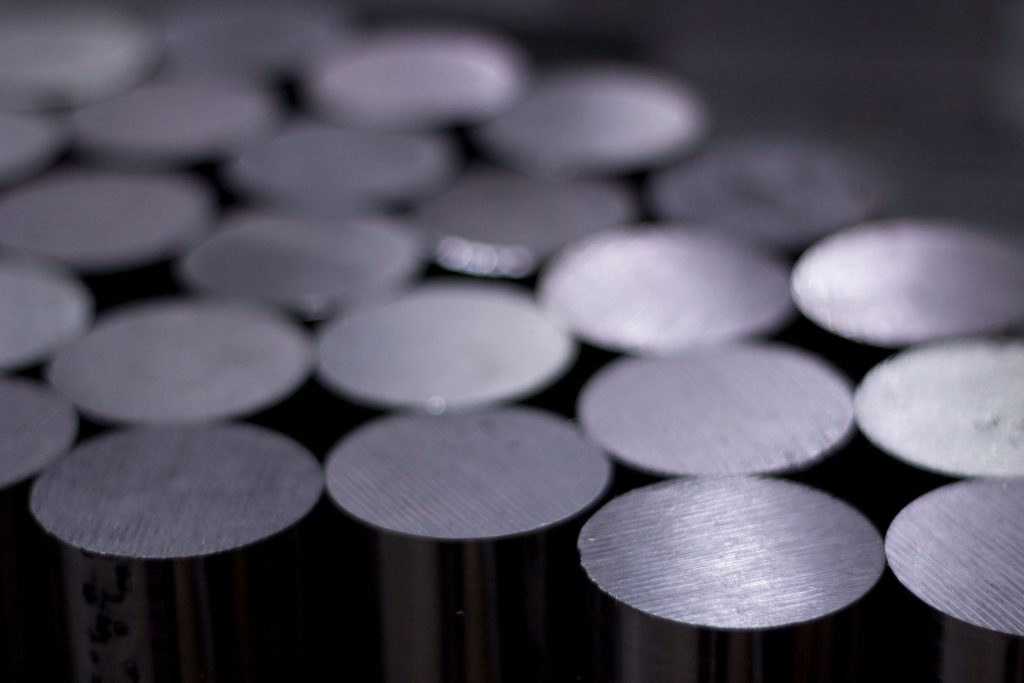
BS S82 — Suppliers and Stockholders
Dynamic Metals has been supplying S156 case-hardening steel to aerospace and motorsport customers. We hold certified stock to BS S82 with no minimum order quantities, available for immediate despatch.
S156 is a 4% nickel-chromium-molybdenum case-hardening steel to British Standard BS S82, manufactured by electric process and supplied in the vacuum arc remelted (VAR) condition. It is one of the most widely specified aerospace case-hardening steels in the British Aerospace Series — designed for components that must combine a hardened, wear-resistant case with a tough, ductile core capable of sustaining high-cycle fatigue loading.
The alloy derives its performance from a carefully balanced composition: 3.8–4.3% nickel for core toughness, 1.0–1.4% chromium for hardenability and case depth consistency, and 0.20–0.30% molybdenum for strength retention and resistance to temper embrittlement. Carbon at 0.14–0.18% is intentionally kept low, ensuring the core remains ductile after case hardening while allowing the surface to develop a hard, wear-resistant carburised layer.
After carburising between 880°C and 930°C, the material is hardened at 825°C ± 10°C and oil quenched, followed by tempering at 190°C ± 5°C. A sub-zero treatment at between -60°C and -80°C is recommended prior to tempering to ensure complete martensite transformation in the case. In the fully heat-treated condition, S156 achieves tensile strength of 1320–1520 MPa with a minimum proof stress of 1030 MPa — properties that place it at the top of the case-hardening steel family.
Material is supplied in the normalised and softened condition for machining, with designation codes covering black bars (S82B), bright bars for machining (S82D), forging stock and billets (S82A), and forgings (S82C). Parts are supplied finally heat treated. All material is ultrasonically tested in accordance with BS S 100 and subject to sulphur printing or deep etching inspection per ingot.
Related Products

Key Features and Benefits
• 4% nickel content delivers exceptional core toughness and fatigue resistance after case hardening — the defining characteristic of this alloy family
• Carburised case hardness achieved through a well-established three-step cycle: carburise, harden at 825°C ± 10°C, oil quench, temper at 190°C ± 5°C
• Fully heat-treated tensile strength of 1320–1520 MPa with minimum proof stress of 1030 MPa — high-strength performance with maintained core ductility
• VAR production ensures premium material cleanliness and consistency throughout, supporting reliable fatigue life in safety-critical rotating components
• Available in multiple supply designations — black bar, bright bar, forging stock, billets and forgings — covering the full range of machined and forged applications. Compliant with AECMA Recommendation FE-PL79, confirming alignment with European aerospace material standards
Technical specification
Related Specifications
16NCD17
W.Nr 1.6722
W.Nr 1.6723
BS S82
Specific Gravity
7.8 g/cm3
Chemical Composition (WT %)
Min
Max
C
0.14
0.18
Si
0.10
0.35
Mn
0.25
0.55
P
-
0.015
S
-
0.012
Cr
1.0
1.4
Mo
0.20
0.30
Ni
3.8
4.3
Fe
Bal
-
Typical Mechanical Properties
Round Bar
0.2% Yield Strength
MPA
427
Tensile Strength
MPA
651
Elongation
%
27
Reduction of area
%
62.5
Hardness
HBW
179
- Fully case-hardened and tempered condition: tensile strength 1320–1520 MPa, minimum 0.2% proof stress 1030 MPa
- Minimum elongation 8%, minimum reduction of area 35%, minimum Izod impact 25 ft lbf
- Carburised case provides hardness and wear resistance at the contact surface
- Low-carbon core retains toughness needed to resist shock loading and high-cycle fatigue
- Sub-zero treatment — conducted at between -60°C and -80°C before tempering — eliminates retained austenite in the case and ensures consistent, stable hardness
- Not a corrosion-resistant steel — offers no meaningful protection against aqueous corrosion or oxidising environments
- Designed for demanding structural and tribological performance rather than environmental resistance
- In service, S156 components are typically lubricated and protected by surface coatings or operating within enclosed, lubricated assemblies
- Where corrosion resistance is a concurrent requirement alongside high fatigue strength, this should be addressed through surface treatment or protective finishing rather than alloy selection
- BS S82 requires manufacture by electric process with VAR (vacuum arc remelting) applied in the remelt cycle
- VAR achieves the material cleanliness necessary for aerospace rotating components
- Every ingot subject to sulphur printing or deep etching inspection
- All material ultrasonically tested in accordance with BS S 100, Annex B
- Combination of controlled melting practice and comprehensive inspection delivers the fatigue performance consistency required for safety-critical helicopter and fixed-wing drivetrain applications
- Supplied in normalised and softened condition (or softened condition for forging stock) — allowing conventional machining before case hardening
- Low carbon content (0.14–0.18%) ensures good machinability in the pre-treatment condition
- Bright bars (S82D) supplied cold drawn, cold rolled, machined or ground after normalising and softening
- Carburising carried out between 880°C and 930°C
- Blank carburising (carburising without intent to use the case) available where only core properties are required
- Normalising between 910°C and 930°C conducted as part of the pre-treatment cycle
- Bar (black and bright), forging stock, billets and forgings — all covered under BS S82
- Supply designations:
- S82B — black bars, normalised and softened
- S82D — bright bars, normalised, softened and subsequently cold finished
- S82A — forging stock and billets, softened
- S82C — forgings, normalised and softened
- Parts supplied finally heat treated to mechanical properties defined in Section 7 of BS S82
- No minimum order quantities on stock items
- 4% nickel composition delivers core toughness that lower-nickel case-hardening grades cannot replicate — reflected in the minimum 25 ft lbf Izod impact requirement
- Many lower-nickel grades can achieve similar surface hardness after carburising but fall short on core toughness — the simultaneously critical failure mode in gear tooth root fatigue and impact loading
- Standard specification for aerospace gear and drivetrain components for this reason
- VAR melting practice provides an additional margin of material consistency not available in conventionally melted grades
- Specialist supplier of S156 to aerospace and motorsport customers since 1997
- Stock held to BS S82 with full material certification provided with every order
- Team available to advise on supply designations, heat treatment routes and available sizes
- No minimum order quantities — supports both development programmes and series production contracts
- AS9100 certified
- Fast UK delivery on stock sizes

Need more information? Get in touch